...

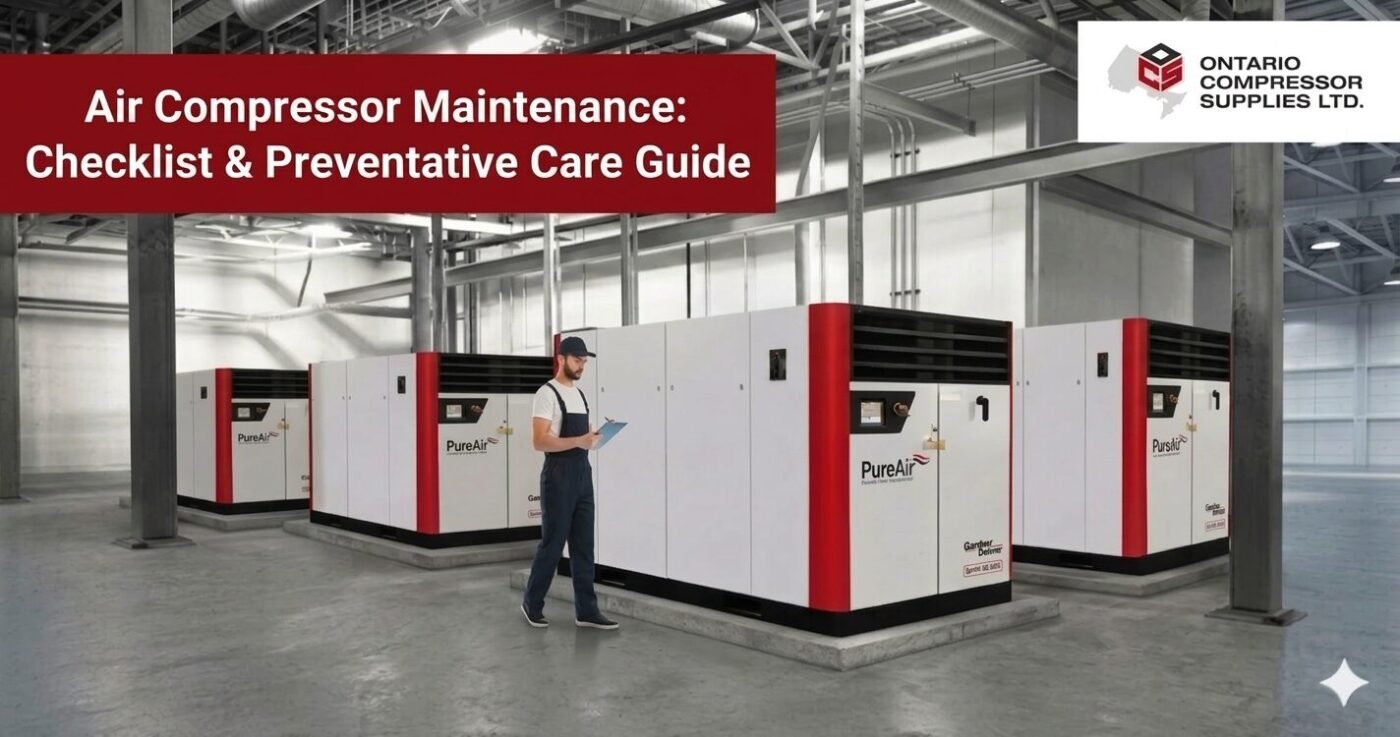
Air Compressor Maintenance: Checklist & Preventative Care Guide

Air compressor maintenance is one of the simplest ways to protect uptime, control operating costs, and extend equipment life. Whether you run a Gardner Denver rotary screw compressor or a reciprocating unit, consistent preventive care helps reduce breakdowns before they interrupt production.

This guide covers the core daily checks, routine service tasks, and common mistakes that can shorten compressor life. It is designed to help operators and plant managers keep compressed air systems running reliably between scheduled service visits.

Why Air Compressor Maintenance Is Important

A well-structured air compressor maintenance program does more than prevent unexpected shutdowns. It helps improve system efficiency, maintain stable air delivery, and protect major components from avoidable wear. When issues such as leaks, contamination, overheating, or poor lubrication are caught early, repairs are usually faster and less expensive than emergency breakdowns.

For business owners and operations teams, that matters because compressor downtime affects much more than the machine itself. It can slow production, create quality issues, disrupt schedules, and increase total cost of ownership. Preventive maintenance helps protect the return on your equipment investment while improving long-term reliability.

Daily Maintenance Checklist

Daily air compressor maintenance should be simple, fast, and consistent. These checks only take a few minutes, but they can reveal early warning signs before they become major service problems. Quincy highlights daily monitoring of gauges and readings, while Rolair emphasizes oil checks, draining moisture, and watching for unusual noise or vibration.

Check oil level

For reciprocating compressors, check crankcase oil level before operation and confirm it is within the recommended range. For oil-injected rotary screw compressors, verify oil level and review the controller or gauge readings for anything outside normal operating conditions. Low, dirty, or incorrect lubricant can accelerate wear and increase heat inside the compressor.

Drain moisture

Moisture should never be ignored in a compressed air system. Drain condensate from receiver tanks, drip legs, and other collection points as required, and confirm automatic drains are working properly. In rotary screw systems, condensate management also matters because poor drainage can contribute to corrosion, contamination, and performance issues over time.

Check for unusual noise, vibration, or leaks

Listen for rattling, knocking, air leaks, and changes in vibration. Watch for oil leaks, pressure instability, and abnormal temperature behavior. These are often the earliest signs that belts, bearings, filters, valves, controls, or internal components need attention.

Weekly / Monthly Maintenance

Beyond daily checks, weekly and monthly tasks help keep the full air system clean, stable, and efficient. These inspections are especially important in dusty, high-duty, or hot operating environments.

Inspect filters

Inspect inlet filters and replace or clean them when needed. In rotary screw compressors, dirty inlet, oil, or separator filters can contribute to contamination, overheating, poor air quality, and unnecessary stress on the airend. In reciprocating compressors, clogged intake filters can also reduce performance and increase wear.

Check belts, hoses, fittings, and guards

Look over belts for tension and wear, and inspect hoses, fittings, and connections for leaks or rubbing. On belt-driven reciprocating units, proper belt tension and alignment matter for efficiency and smooth operation. Guards, vibration pads, and mounting hardware should also be checked to make sure the unit is secure and protected during operation.

Clean coolers and exterior components

Keep exterior surfaces, ventilation areas, and cooling components clean. Dirt buildup can reduce heat dissipation and contribute to overheating, especially on rotary screw compressors operating for long hours. A clean compressor is easier to inspect and less likely to hide leaks, loose hardware, or contamination.

Service Intervals: When to Service and When to Replace Parts

Air compressor service intervals depend on compressor type, operating hours, duty cycle, environment, and manufacturer requirements. Quincy notes that many rotary screw maintenance checkpoints fall into daily, quarterly, annual, and major-overhaul categories, with inspection windows often ranging around 1,000 to 3,000 operating hours depending on the machine.

In practice, that means daily operator checks should be paired with scheduled maintenance for oil changes, filter replacement, separator service, drain inspections, control checks, and safety inspections. Reciprocating compressors also need regular attention to oil, belts, valves, tank condition, and safety relief components. Exact intervals should always follow the Gardner Denver manual for the specific model in service.

Replace parts when you see clear signs of deterioration or when scheduled service calls for it. That includes clogged filters, degraded lubricants, worn belts, leaking seals, faulty drains, damaged guards, unsafe valves, and components that cause temperature, pressure, or vibration abnormalities. Waiting too long usually turns a routine service item into a larger reliability problem.

Common Mistakes to Avoid

One of the most common air compressor maintenance mistakes is skipping small routine checks because the machine still appears to be running normally. Both reference articles show the same pattern: minor issues such as leaks, dirty filters, abnormal readings, or poor lubrication often develop gradually, then lead to costly downtime when ignored.

Another common mistake is treating all compressors the same. Rotary screw compressors and reciprocating compressors have different service points, operating patterns, and maintenance priorities. Using the wrong lubricant, delaying filter changes, ignoring condensate, or overlooking belt and control issues can shorten equipment life and reduce performance.

A final mistake is waiting for failure instead of planning service. Preventive maintenance is almost always less disruptive than emergency repairs, especially in facilities that depend on compressed air every day. A documented service schedule helps teams stay ahead of issues instead of reacting to them.

Need Help With Air Compressor Maintenance?

If your team needs support with routine maintenance, troubleshooting, or planned service, Ontario Compressor can help. We provide authorized Gardner Denver service, preventive maintenance programs, emergency support, parts supply, and technical assistance to keep your compressed air system reliable.

Link this CTA naturally to your internal page: air compressor parts and service.

FAQ — Desiccant Air Dryer

How often should I service my air compressor?

It depends on the compressor type, operating hours, and environment. Daily inspections should be routine, while larger service intervals may be weekly, monthly, quarterly, annual, or hour-based depending on the model. For rotary screw compressors, some inspection windows fall in the 1,000 to 3,000 hour range, but the manufacturer’s schedule should always be the final reference.

Daily maintenance usually includes checking oil level, draining moisture where required, reviewing gauges or controller readings, and listening for unusual noise or vibration. It may also include a quick check for leaks, heat issues, and visible signs of wear.

Skipped maintenance increases the chance of overheating, contamination, leaks, poor air quality, reduced efficiency, emergency repairs, and unplanned downtime. Over time, it can also shorten compressor life and increase total operating cost.

background

Have a question?

Get expert advice, high-quality compressor solutions, and reliable support tailored to your needs.
Contact us and one of our specialists will get back to you promptly!”

background

Have a question?

Get expert advice, high-quality compressor solutions, and reliable support tailored to your needs.
Contact us and one of our specialists will get back to you promptly!”

Seraphinite AcceleratorOptimized by Seraphinite Accelerator
Turns on site high speed to be attractive for people and search engines.