Introduction Moisture is one of the most underestimated problems in...
Read More

 Skip to content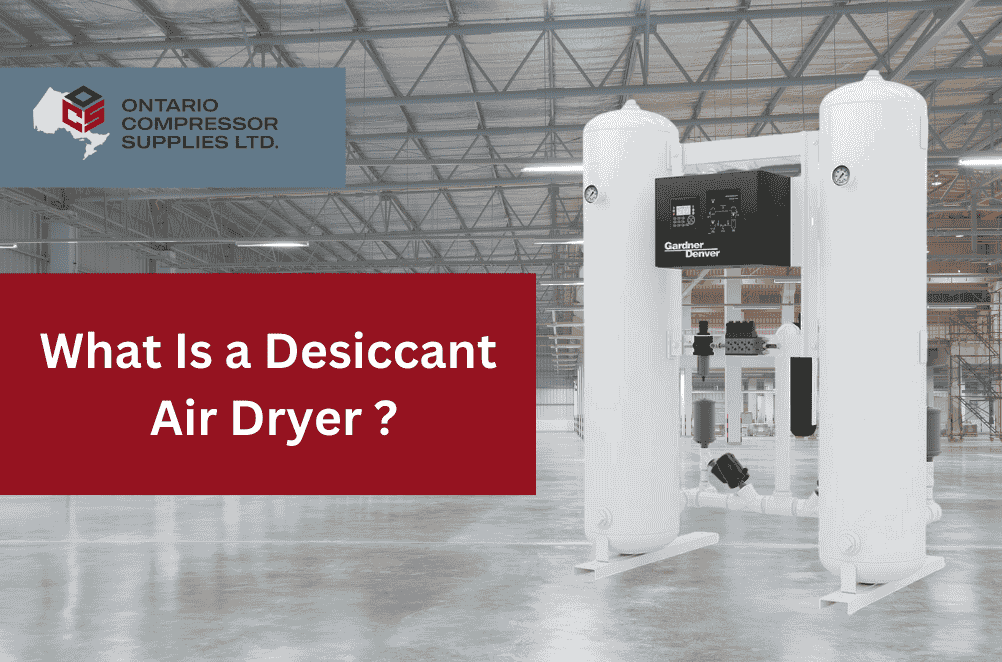
Moisture is one of the most underestimated problems in compressed air systems. Even small amounts of water vapor can lead to corrosion inside pipelines, freezing in cold environments, premature failure of pneumatic tools, and contamination of sensitive products. Over time, these issues result in increased maintenance costs, unplanned downtime, and reduced system reliability.
For many general-purpose applications, refrigerated air dryers provide an acceptable level of moisture control. However, certain industries and operating conditions demand air that remains consistently dry regardless of temperature, load changes, or ambient conditions. This is where desiccant air dryers become essential.
Desiccant air dryers are designed for applications that require extremely low pressure dew points, typically down to -100°F (-73°C) and, in specialized cases, even lower. They are commonly used in manufacturing, electronics, food and pharmaceutical production, laser cutting, and outdoor compressed air systems exposed to freezing temperatures.
A desiccant air dryer is a type of compressed air dryer that removes moisture by adsorption rather than cooling. Instead of lowering the air temperature to condense water vapor, the dryer uses a drying agent—known as a desiccant—to attract and hold moisture directly from the compressed air stream.
This approach allows desiccant dryers to achieve dew points that refrigerated dryers simply cannot reach. While refrigerated systems typically deliver pressure dew points around +35°F to +39°F, desiccant dryers can reliably supply air at -40°F or even -100°F in critical applications.
Because of this capability, desiccant air dryers are widely used in processes where even trace amounts of moisture can lead to product defects, equipment damage, or safety risks.
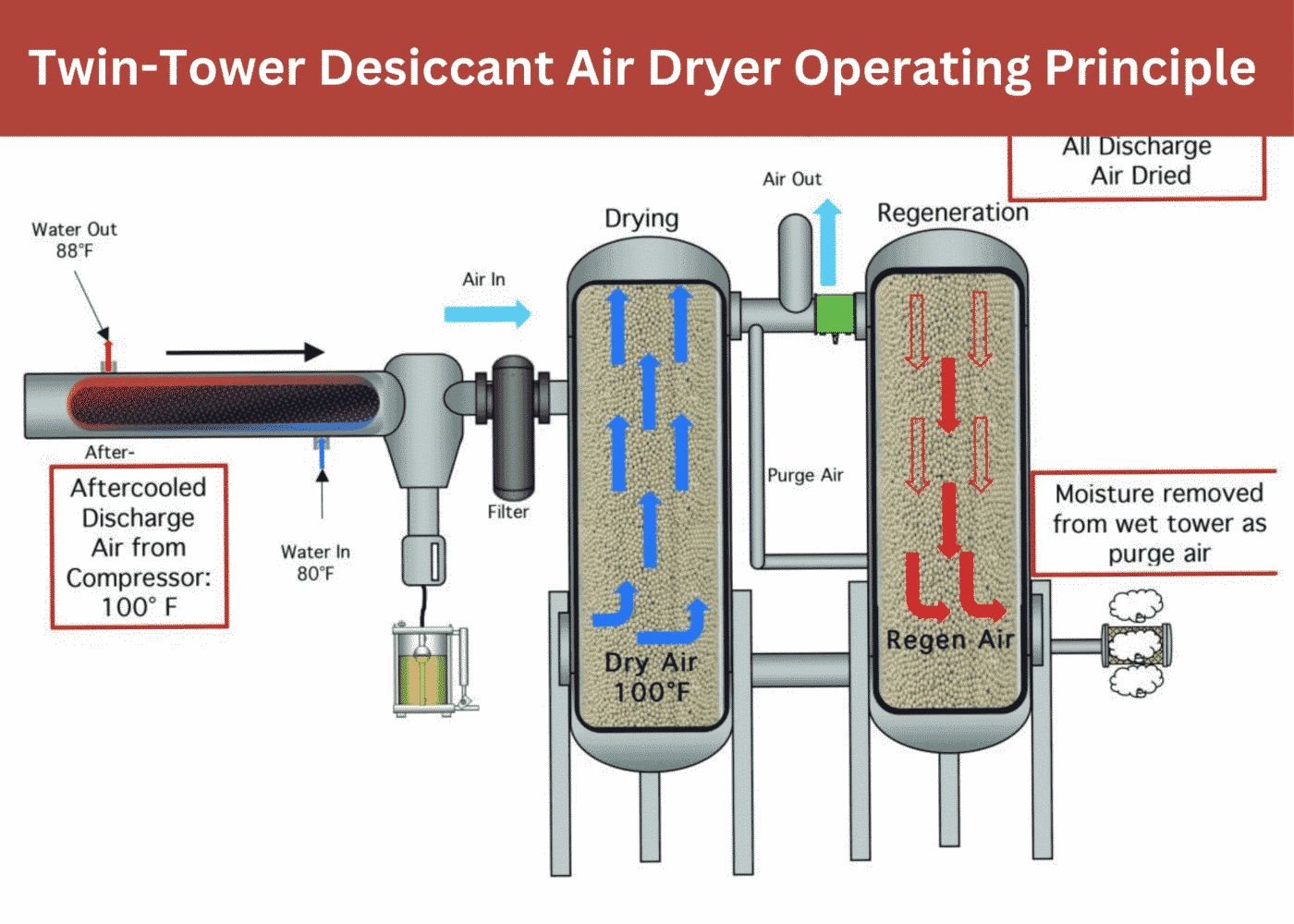
Most industrial desiccant air dryers use a twin-tower design to provide a continuous supply of dry compressed air. Each tower is filled with desiccant media and alternates between drying and regeneration cycles.
As wet compressed air enters the dryer, it flows through one of the towers where moisture is adsorbed by the desiccant material. The air leaving the tower is extremely dry and suitable for sensitive downstream applications. At the same time, the second tower is regenerated to remove the moisture it absorbed during the previous cycle.
Once the active tower reaches its moisture capacity, the system automatically switches towers. This alternating process ensures uninterrupted operation and consistent air quality, even during continuous industrial use.
The performance of a desiccant air dryer is determined primarily by the desiccant media inside the towers. Common materials such as activated alumina, molecular sieve, and silica gel are engineered with a very high internal surface area and microscopic pores that strongly attract water molecules.
Unlike refrigerated dryers, which rely on condensation, desiccants remove moisture at the molecular level through adsorption. This allows them to extract water vapor even when humidity levels are already very low or when ambient temperatures drop below freezing.
As a result, desiccant dryers deliver ultra-dry compressed air with no liquid water formation, no risk of frozen pipelines, and significantly reduced corrosion throughout the system. This level of moisture control protects downstream equipment and extends the overall lifespan of the compressed air installation.
Although all desiccant dryers rely on adsorption, different designs are available to match specific efficiency and operating requirements.
Heatless desiccant air dryers are the most common configuration. They use a small portion of already dried compressed air to regenerate the saturated tower. This design is simple, highly reliable, and well-suited for smaller systems or applications requiring consistent -40°F dew points, including outdoor installations.
Heated desiccant air dryers improve efficiency by using external heaters during regeneration. By applying heat, moisture is removed more effectively from the desiccant, reducing the amount of compressed air required for purge. These dryers are often selected for larger systems where energy savings justify the higher initial cost.
Blower purge desiccant air dryers represent the most energy-efficient option for large industrial applications. Instead of using compressed air for regeneration, they rely on ambient air drawn in by a blower and heated before passing through the desiccant bed. While more complex and expensive, this design eliminates compressed air loss entirely.
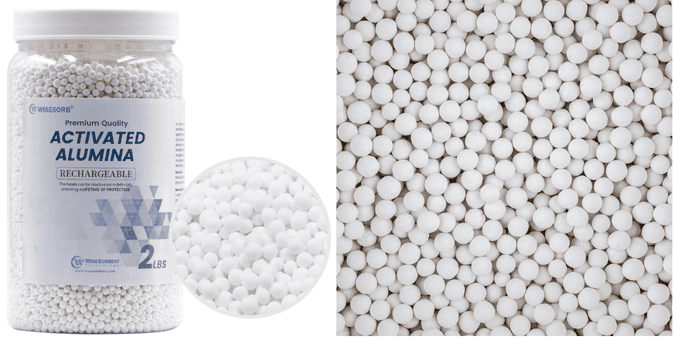
One of the most commonly used desiccant materials in industrial air dryers is activated alumina, which is formed into small spherical beads and packed inside the dryer towers. These beads are produced from aluminum oxide and treated to create a highly porous internal structure with an extremely large surface area. This structure allows activated alumina to attract and hold water vapor molecules efficiently as compressed air passes through the desiccant bed.
Activated alumina is mechanically strong, resistant to attrition, and stable over a wide range of operating temperatures, making it well suited for continuous industrial use. In addition to moisture removal, it also helps limit corrosion and contamination within the compressed air system. When properly filtered and regenerated, activated alumina provides consistent dew point performance and long service life, which is why it is widely used in heatless, heated, and blower purge desiccant air dryers.
The choice between a desiccant air dryer and a refrigerated air dryer depends on the required air quality and operating environment.
Refrigerated dryers are cost-effective and energy-efficient for general manufacturing where moderate moisture levels are acceptable. However, they are not suitable for freezing conditions or applications where extremely dry air is required.
Desiccant air dryers, on the other hand, are essential when moisture can cause corrosion, freezing, contamination, or process failures. Although they consume more energy, they deliver superior air quality and reliability in demanding industrial environments.
Selecting the correct desiccant air dryer ensures reliable dew point control, longer desiccant life, and lower operating costs. The required pressure dew point depends on the application, with most industrial systems needing -40°F (5°C) or lower to prevent condensation and corrosion.
The dryer must be sized for peak airflow (SCFM), not average demand, while maintaining acceptable pressure drop to avoid unnecessary energy loss. Inlet and ambient temperatures directly affect moisture load and dryer performance, often requiring proper upstream cooling and moisture separation.
Finally, energy efficiency and duty cycle are key considerations. Heatless dryers suit intermittent use, while heated or blower purge dryers provide better efficiency for continuous operation. A properly selected dryer delivers stable performance and reduced total cost of ownership.
Desiccant air dryers are commonly used in industries where air quality directly affects product quality, equipment reliability, or operational safety. These include electronics and PCB manufacturing, pharmaceutical and medical facilities, food and beverage packaging, laser cutting and CNC machining, instrumentation air systems, outdoor compressed air installations, and marine or offshore environments.
In such applications, even minimal moisture can lead to significant operational risks, making desiccant dryers a critical component of the compressed air system.
Desiccant air dryers provide a level of moisture control that is impossible to achieve with refrigerated drying technology alone. By using advanced desiccant media and carefully controlled regeneration cycles, they deliver clean, dry, and reliable compressed air for the most demanding industrial applications.
Whether configured as heatless, heated, or blower purge systems, desiccant dryers help protect equipment, improve product quality, and maintain stable operation in environments where moisture is not an option—but a serious risk.
Most desiccant air dryers deliver a stable -40°F pressure dew point. Lower dew points, such as
A desiccant air dryer is required when compressed air quality is critical and moisture can cause corrosion, contamination, or process instability. These dryers are commonly used where clean, dry, and consistent air is essential for equipment reliability or product quality.
In properly designed systems with effective filtration, desiccant media typically lasts 3–5 years. Excessive moisture load, oil carryover, or insufficient filtration can shorten desiccant life and reduce dryer performance.
Yes. Routine inspection of valves, desiccant condition, and upstream filtration is necessary to maintain stable dew point performance and consistent air quality over time.
Heatless dryers are mechanically simple and reliable but use compressed air for regeneration. In applications with continuous demand, heated or blower purge dryers may provide better overall energy efficiency.
Yes. Desiccant air dryers remove moisture at the molecular level, resulting in lower humidity, more stable dew points, and reduced risk of condensation downstream. This makes them better suited for applications requiring higher air quality than refrigerated dryers can provide.
The main difference is the level of moisture removal. Desiccant dryers achieve significantly lower and more stable dew points, while refrigerated dryers are designed for general-purpose applications with moderate air quality requirements.
Introduction Moisture is one of the most underestimated problems in...
Read MoreA Simple Industrial Guide A rotary screw air compressor is...
Read MoreIntroduction Moisture is one of the most underestimated problems in...
Read MoreA Simple Industrial Guide A rotary screw air compressor is...
Read More
Get expert advice, high-quality compressor solutions, and reliable support tailored to your needs.
Contact us and one of our specialists will get back to you promptly!”
 Optimized by Seraphinite Accelerator