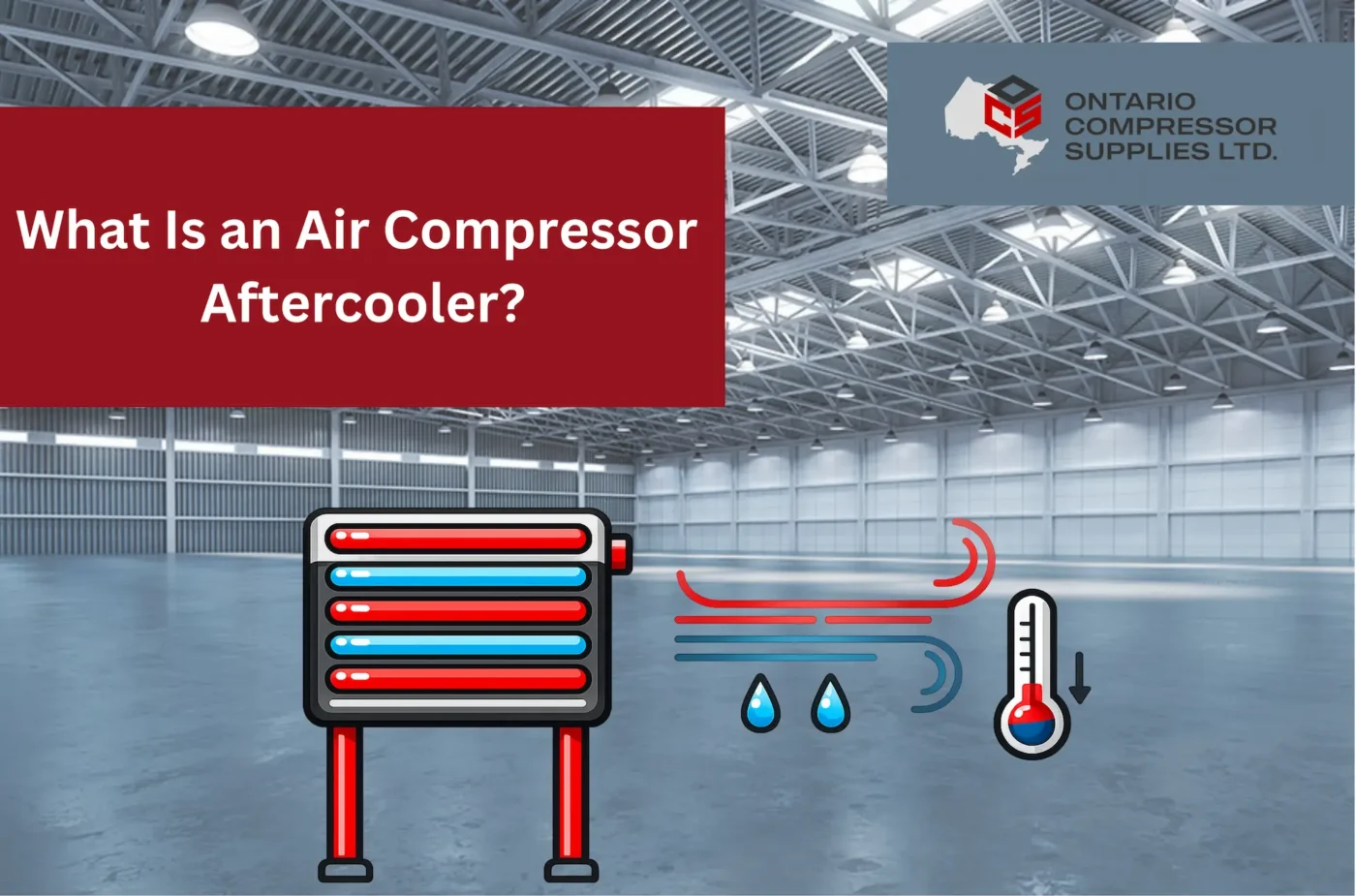
What Is an Air Compressor Aftercooler?

Compressed air powers tools, machines, and equipment in factories and industrial facilities. But when air is compressed, it becomes hot and full of moisture.

If this heat and moisture are not controlled, it can cause:

  • Rust inside pipes
  • Equipment damage
  • Reduced efficiency
  • Costly downtime

An air compressor aftercooler cools the hot air immediately after compression. As the air cools, moisture condenses into water, which can then be safely removed.

Why Does Compressed Air Get Hot?

When air is compressed:

  • Air molecules are forced closer together.
  • Pressure increases.
  • According to thermodynamic laws, temperature rises as pressure increases.

This is called the heat of compression.

For example: Ambient air at 20°C can exit a compressor at 80–200°C depending on the type and pressure.

Hot air holds more water vapor, which can condense inside pipes and equipment if not cooled. That’s why an aftercooler is essential.

How an Air Compressor Aftercooler Works

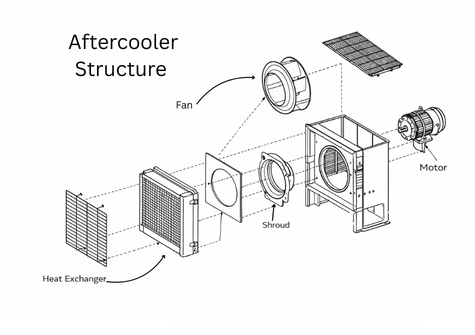
An aftercooler for air compressor systems functions as a heat exchanger.

Step-by-Step Process:

  1. The air compressor compresses ambient air.
  2. Air exits the compressor at high pressure and high temperature.
  3. The hot compressed air enters the air compressor aftercooler.
  4. Cooling medium (air or water) removes heat.
  5. As air cools, water vapor condenses.
  6. A moisture separator removes condensed water.

This reduces the load on air dryers and ensures clean, dry compressed air.

Compressor Types & Their Cooling Requirements

Different compressors generate different heat levels, so their cooling requirements differ:

1.Rotary Screw Air Compressors

  • Continuous compression process
  • Common in industrial applications
  • Generate consistent high discharge temperatures
  • Often include integrated cooling systems

These systems frequently use a compressed air aftercooler to manage continuous heat output.

2.Reciprocating (Piston) Air Compressors

  • Use pistons to compress air in cycles
  • Produce temperature spikes during compression strokes
  • May require external aftercoolers in high-demand systems

They are common in smaller industrial or intermittent-duty operations.

3.Centrifugal Air Compressors

  • Used in large industrial facilities
  • High-volume airflow
  • Multi-stage compression with intercooling and aftercooling

These systems rely heavily on advanced heat exchangers (aftercoolers) to remove heat and moisture efficiently.

Tip: The right aftercooler depends on your compressor type and usage.

Types of Air Compressor Aftercoolers

Air-Cooled Aftercooler

  • Uses ambient air and a fan
  • Lower installation complexity
  • Suitable for many manufacturing environments
  • Cost-effective solution

Water-Cooled Aftercooler

  • Uses water as cooling medium
  • More efficient heat transfer
  • Ideal for large industrial operations
  • Compact footprint

Selecting the right aftercooler depends on system size, environment, and performance requirements.

Intercooler-Structure

Key Components of a Compressed Air Cooling System

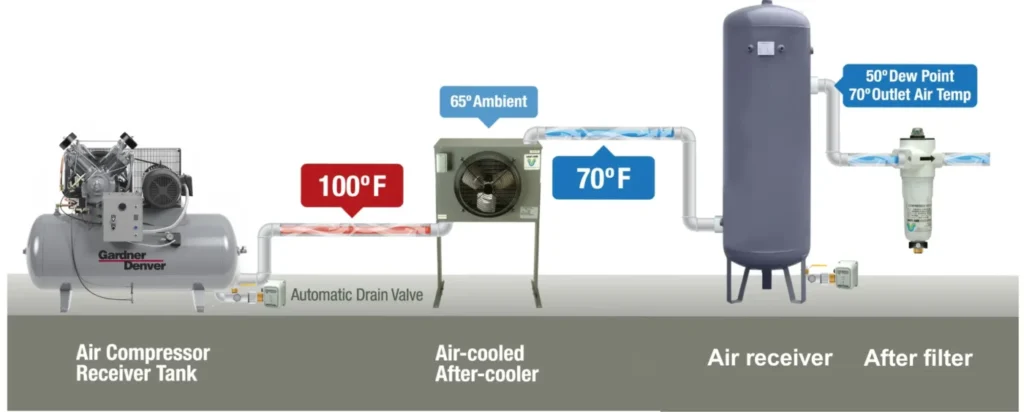
An aftercooler works with other parts to keep compressed air cool and dry:

  • Air Compressor – compresses air, making it hot and full of moisture
  • Aftercooler – cools the air so moisture condenses
  • Moisture Separator – removes the condensed water
  • Air Receiver Tank – stores air and helps settle more moisture
  • Air Compressor Dryer – removes remaining moisture for dry air
  • Condensate Drain System – automatically drains collected water

Together, these components maintain air quality, efficiency, and equipment protection.

Air Compressor Aftercooler vs. Air Compressor Dryer

These components are often confused.


Component

Function

Air compressor aftercooler

Removes heat and bulk moisture immediately after compression

Air compressor dryer

Removes remaining moisture to achieve specific dew point

Both are critical: the aftercooler handles initial condensation, and the dryer ensures final air quality.

Industrial Applications of Aftercoolers

Industries that require reliable compressed air include:

  • Manufacturing
  • Automotive production
  • Food processing
  • Pharmaceutical facilities
  • Packaging plants
  • Metal fabrication

Without proper cooling, moisture contamination can cause:

  • Tool failure
  • Product contamination
  • Rusted pipelines
  • Increased downtime
  • Higher maintenance costs

Installing the correct aftercooler for air compressor systems protects operations and reduces long-term expenses.

Maintenance, Efficiency & Troubleshooting

Proper maintenance ensures optimal performance.

Maintenance Best Practices

  • Inspect and clean heat exchanger fins
  • Check cooling fans or water flow
  • Inspect moisture separator
  • Test condensate drains
  • Monitor discharge temperatures

Routine industrial air compressor service improves efficiency and extends equipment lifespan.

Common Issues:

  • Excess moisture in air lines: fouled heat exchanger, poor cooling, or separator malfunction
  • High operating temperature: fan failure, insufficient water flow, blocked airflow
  • Overloaded air dryer: aftercooler not removing enough heat

Regular service improves efficiency and extends equipment lifespan.

Energy Efficiency Benefits

An optimized compressed air cooling system:

  • Reduces energy consumption
  • Lowers dryer load
  • Minimizes maintenance costs
  • Improves air quality
  • Extends compressor life

Cooling air early in the system reduces total energy demand.

When Should You Upgrade or Install an Aftercooler?

You may need an air compressor aftercooler if:

  • Installing a new industrial air compressor
  • Expanding production
  • Experiencing moisture-related failures
  • Running equipment continuously
  • Facing rising maintenance costs

A professional evaluation ensures correct sizing and integration.

Whether configured as heatless, heated, or blower purge systems, desiccant dryers help protect equipment, improve product quality, and maintain stable operation in environments where moisture is not an option—but a serious risk.

How Ontario Compressor Supports Your System

Ontario Compressor Supplies Ltd provides:

  • Compressed air system evaluations
  • Aftercooler installation and integration
  • Air compressor dryer solutions
  • Preventive maintenance programs
  • Emergency repair services
  • Energy efficiency audits
  • Rental compressor solutions

We help industrial facilities design, maintain, and optimize reliable compressed air systems.

Final Thoughts

An air compressor aftercooler is more than just an accessory, it’s a critical part of a reliable compressed air system. By controlling heat and removing moisture early in the process, it protects your equipment, enhances energy efficiency, and reduces costly downtime, ensuring your operations run smoothly and efficiently.

FAQ — Desiccant Air Dryer

What does an air compressor aftercooler do?

 An air compressor aftercooler cools hot compressed air after it leaves the compressor. By lowering the air temperature, it causes moisture vapor to condense into liquid water, which can then be removed from the system. This reduces condensation, protects equipment, and improves overall compressed air quality.

An aftercooler is highly recommended for most industrial compressed air systems. When air is compressed, it becomes hot and holds more moisture. Without cooling, that moisture travels through the system and can cause corrosion, equipment damage, and air quality issues. An aftercooler removes a large percentage of this moisture before it reaches dryers and tools.

An aftercooler reduces air temperature and removes bulk moisture immediately after compression. An air dryer removes remaining moisture to achieve a specific dew point. In most industrial systems, the aftercooler handles initial condensation, while the dryer provides final moisture control for sensitive applications.

An air compressor aftercooler can remove up to 60 to 70 percent of moisture from compressed air, depending on system conditions and ambient temperature. The exact amount depends on discharge temperature, airflow volume, and humidity levels.

The two main types are air cooled and water cooled aftercoolers. Air cooled models use ambient air and a fan to dissipate heat. Water cooled models use circulating water for more efficient cooling and are typically used in high capacity industrial environments.

background

Have a question?

Get expert advice, high-quality compressor solutions, and reliable support tailored to your needs.
Contact us and one of our specialists will get back to you promptly!”